 hello@mydataremoval.com
 (855) 700-2914


With so many data brokers out there, it’s tough to decide where to start. Should you start with that data broker? Where and how do you opt out?
33Across is a data broker company that collects user data and creates user profiles using an AI-driven identity segmentation system. To opt out, visit its website and click the browser and email opt-out links.
According to the Electronic Privacy Information Center (EPIC), there are thousands of data brokers in the U.S. Each of them collects, buys, aggregates, and sells the personal information of millions of Americans. For them, the product is you, the consumer. And one of these data brokers is 33Across.
What is 33Across?

33Across is a New York City-based company focused on digital advertising technology. They offer programmatic advertising, identity resolution tools, and audience targeting. They also have AI-driven identity segmentation systems. These systems group users based on their behavioral patterns, their interests, what they read online, and what they share, so companies know what kinds of ads to send you.
Based on 33Across’s Privacy Policy, the user information it collects includes:
- Activity data (e.g., ads clicked, copied content, signups, etc.)
- IP Addresses
- The browser you use
- Hashed (encoded) email address
- Browsing history
- Name
The Possible Risks

Before we move to the guide, you should know the reasons why it’s important to opt out of 33Across. There are risks, such as the following:
- Risk No. 1: Constant Tracking: With 33Across collecting data across multiple websites, you become subject to constant tracking. This means that every search, click, and website you visit will be constantly monitored. Over time, companies will know more about you than your family and friends do.
- Risk No. 2: Shadow Profiles: With your browsing activity, inferred interests, device identifiers, and other data, companies like 33Across create shadow profiles or audience segments. This can be risky as they can either be surprisingly specific or inaccurate, which can affect you in the future. These profiles also enable non-stop targeted ads.
- Risk No. 3: Data Breaches: Every company that collects valuable data can be targeted by hackers. One data broker that was breached was National Public Data, exposing nearly 3 billion records. 33Across can get breached as well. And when data brokers get breached, the personal data of millions of individuals is sold on the dark web or used for scams.
33Across Opt Out Guide
Here’s the detailed guide for opting out of 33Across:
1) Go to 33Across’s Website

Go to the 33Across website. If you scroll down to the bottom of the page, you’ll see “Do Not Sell or Share My Information” and “Opt Out.” You can click either one, as both will redirect you to the opt-out page.
2) Click Your Preferred Opt-Out Method
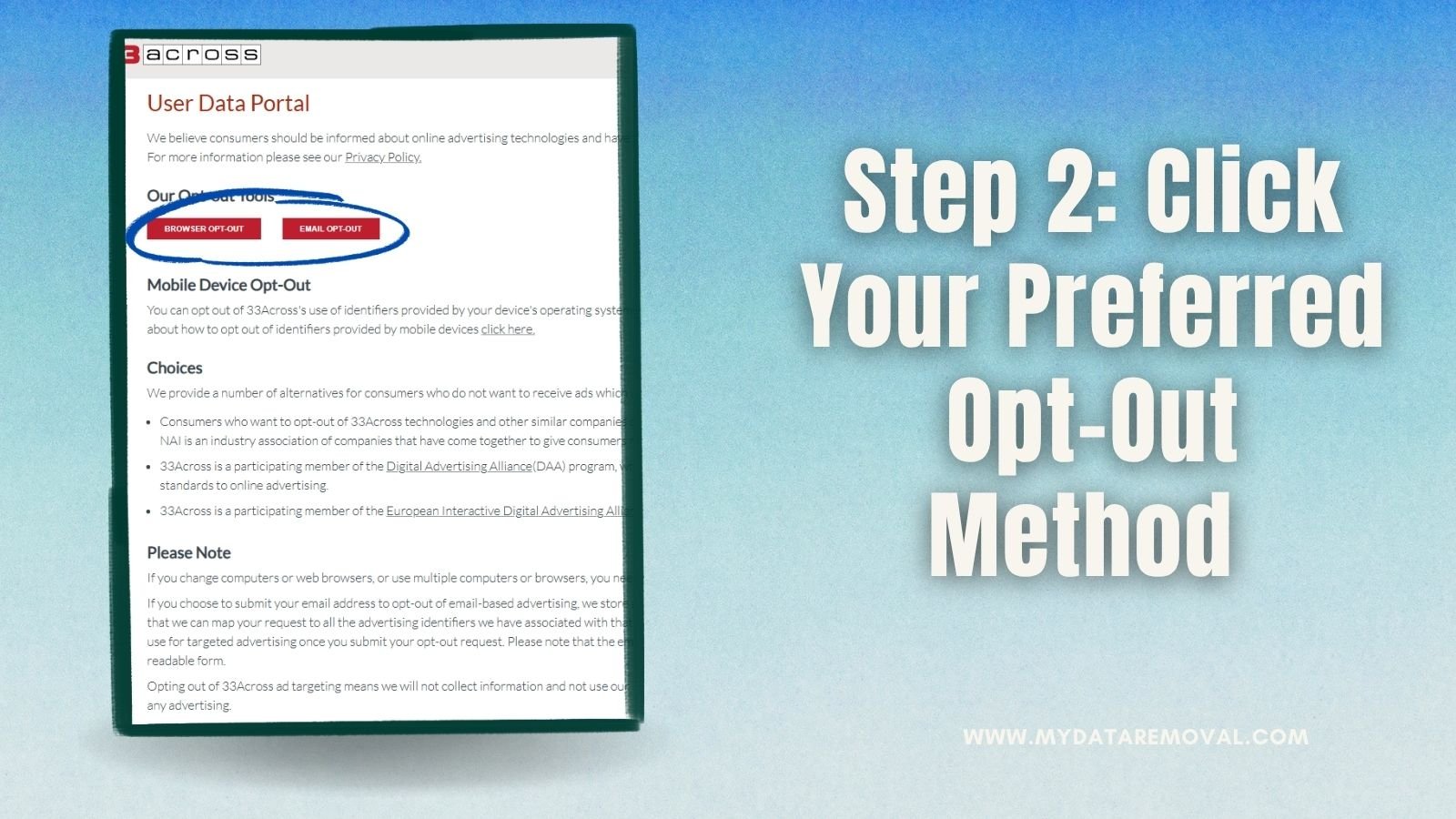
Click your preferred opt-out option, either browser opt-out or email opt-out.
With the browser opt-out, you just have to click the opt-out button. But remember, if you’re using multiple browsers, you should repeat the opt process for each browser.
With email opt-out, you have to enter your email in the user data portal and then click submit. This will opt you out of the data linked to your hashed email.
Conclusion
Overall, it’s beneficial to opt out of 33Across. It will help you avoid constant tracking and the risk of a data breach.
Frequently Asked Questions
Who or what company uses 33Across?
Some companies that use 33Across are: 1) Goodgame Studios, 2) OfferUp, 3) YourDictionary, 4) iPrice Group, and 5) 123RF. These companies use data from 33Across to improve their marketing strategies.
Who are the big three in online marketing?
The big three of online advertising include: 1) Google, 2) Meta, and 3) ByteDance or TikTok. Google is the leading advertiser with its search and video ads features. Meanwhile, Meta leads in social media advertising, and TikTok leads in algorithm-driven short-form videos.
How can you remove my information from data brokers?
You have two options to opt out of data brokers: 1) manually search for which data broker has your data and follow the opt-out and deletion procedures, or 2) sign up for a data removal service, which automates the opt-out process.

