hello@mydataremoval.com
 (855) 700-2914


Here's a question: Why did Tesla get promoted? It's because it had excellent power management. Get it? Because of its advanced charging technology. But kidding aside, Tesla has more to improve in the area of security.
Tesla was hacked during the Pwn2Own Automotive 2026 competition. This highlights vulnerabilities in Tesla products. Users can stay safe by optimizing their account’s security and using Tesla's security features.
While Tesla is known for pioneering high-performance electric vehicles and its commitment to sustainable energy, the company has more room to grow when it comes to security, especially since security researchers were able to hack its infotainment system.
Tesla Hacked
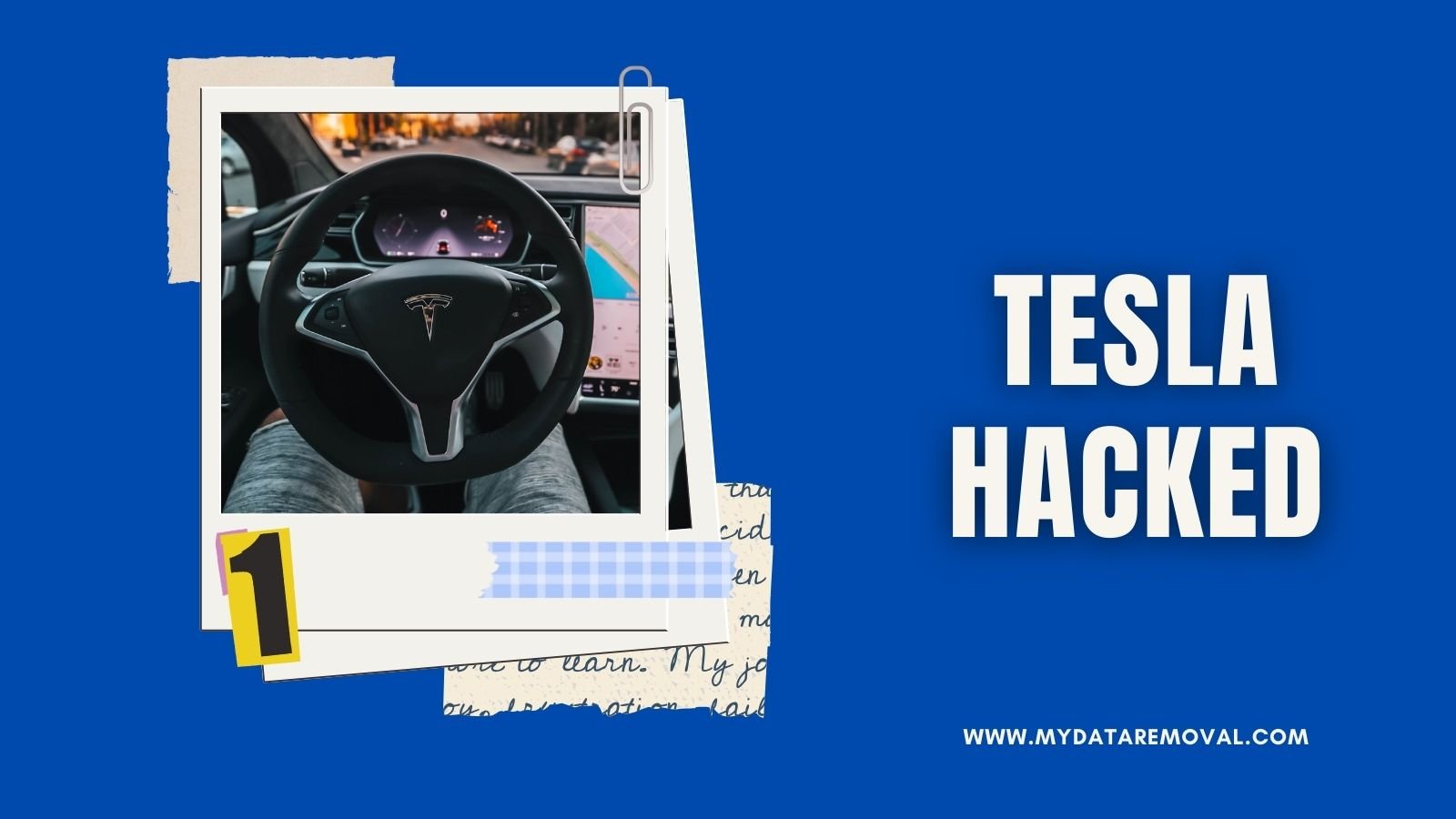
During the Pwn2Own Automotive 2026 competition, security researchers hacked Tesla’s Infotainment System. The team, Synacktiv, participated in the USB-based category. They successfully chained a data leak and an out-of-bounds write flow to get root permissions on Tesla's Infotainment System. So, the Synacktiv Team took home $35,000.
In addition to the successful Tesla hack, the team also gained a root-level code execution on the Sony XAV-9500ES digital media receiver ($20,000 cash award).
Here are the other teams that participated:
- Fuzzware.io: Hacked an Alpitronic HYC50 Charging Station, an Autel charger, and a Kenwood DNR1007XR navigation receiver ($118,000 reward).
- PetoWorks: Gained root privileges on a Phoenix Contact CHARX SEC-3150 charging controller ($50,000).
Pwn2Own Automotive is currently underway in Tokyo. The Zero Day Initiative is overseeing it. There are 73 security teams participating, with Tesla electric vehicles being the top target for security researchers. And according to BleepingComputer, security researchers have already won over half a million dollars in the first 24 hours of the competition.
Companies that have had their tech hacked have 90 days to implement patches before the Zero Day Initiative publicizes the data.
The Risks of Tesla Being Hacked
Now, why should you care about this? Why should you worry that Tesla is vulnerable to hacks? If you own a Tesla or are planning to get one, you should care because of the following risks:
- Data Privacy Threats: Tesla getting hacked can lead to serious data breaches, compromising the data Tesla has on you. This includes your name, addresses, bank details, Social Security number, your vehicle's location, and more. These pieces of information can be sold on the dark web, enabling identity theft, scams, and harassment. You can learn more about scams via Scam-Savvy.
- Vehicle Control: When hackers expose your TeslaMate, they'll be able to remotely unlock doors, track your locations, or enable keyless driving.
- Physical Safety Concerns: Scammers can also attack you with phishing through fake WiFi networks at charging stations. This will allow scammers to generate rogue phone keys to unlock your Tesla vehicle and drive it away. Plus, they will be able to control your doors and speakers while you're driving, which can be dangerous and lead to harm.
Tesla 2023 Data Breach
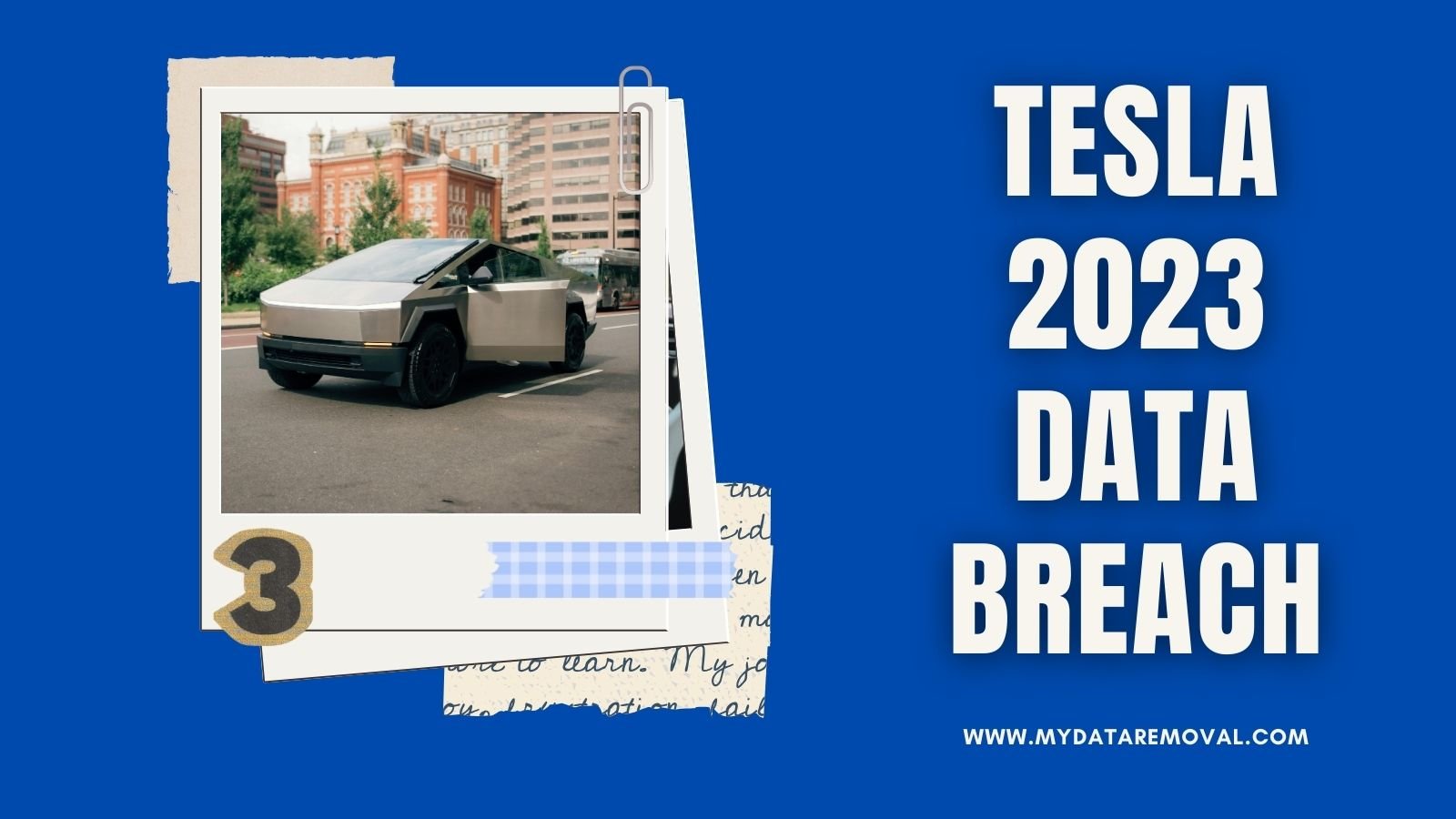
So, did Tesla have a data breach? Yes! In May 2023, Tesla suffered a data breach. It was because two former employees accessed over 100 GB of data, affecting over 75,000 current and former employees.
The compromised pieces of information are as follows:
- Names
- Dates of birth
- Social Security numbers
- Employment records
- Production secrets
- Customer bank details
- Customer complaints
Consequently, Tesla's employees were exposed to risks. And what's worse, Tesla failed to send notifications to the affected individuals for several months.
This data breach tells us that even tech giants like Tesla are vulnerable to attacks; that our personal data is at risk, even in the hands of companies that focus on security.
What Tesla Users Can Do
If you're a Tesla owner, here are some things you can do to stay safe and secure:
- Leverage Core Features: Make use of Tesla's security features. For example, you can activate “PIN to Drive.” This will stop thieves who stole your phone or keys from accessing your Tesla. You can also turn on “Sentry Mode,” which will record your surroundings and alert your app whenever there's a threat.
- Protect Your Tesla Account: Make sure your Tesla account is safe from hackers by using multi-factor authentication (MFA). Don't forget to use strong, unique passwords. This way, hackers won't easily guess your login credentials, and if they do, they won't be able to access your accounts without the authentication code.
- Regularly Monitor Your Habits: Make it a habit to check your app notifications. See if there are anomalies. Also, check your privacy settings to optimize permissions on data sharing. This will help you protect your information from data breaches.
- Check for Updates: Lastly, keep your software updated, especially since Tesla patches vulnerabilities quickly. This will ensure that hackers won't have weak points to exploit.
Conclusion
Overall, while Tesla prioritizes security, there will always be vulnerabilities that attackers can exploit. This puts the privacy of Tesla owners at risk.
What you can do is to ensure that you optimize your account’s security and make use of Tesla's security features.
Frequently Asked Questions
How do you know if your car has been hacked?
Here are some signs that your semi-autonomous vehicle has been hacked: 1) loss of control over engine or brake pedals, 2) unusual warnings from your monitoring systems, 3) change in time displays, 4) unstable GPS destination, and 5) uncontrollable audio.
What are the biggest criticisms of Tesla cars?
Criticisms of Tesla cars revolve around safety and quality. Users report that there are sudden brake failures, unintended acceleration, and unstable wheels because of faulty car suspension.
How do you know if your computer has been hacked?
To know if your computer has been hacked, use an antivirus app. Let it scan your computer for malware or viruses that you could have mistakenly installed. You can use “Have I Been Pwned” to see if the malware has caused a data leak.